
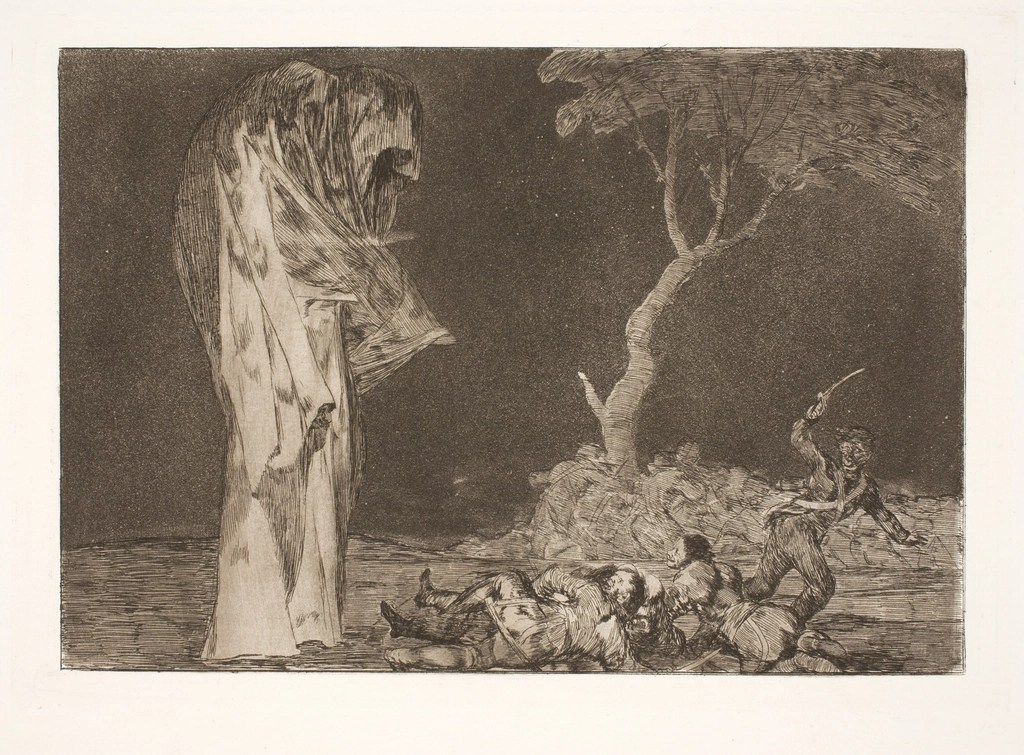
Since I was in college, I have had to fight against anxiety. That’s nothing unique to me though. That’s increasingly a common experience for most people, especially in today’s age, and the statistics certainly bear that out. But there has been one thing as of recent that I have added to my tool-belt for contending with this ugly beast. Namely, I have started to frame anxiety as a foreign agent.
For people who have regular–maybe even daily–struggles with anxiety, it’s almost as if anxiety starts to become your roommate. It’s just someone we put up with and learn to tolerate. We learn to live with our anxiety and make space for it in our lives, accepting it as an inevitability. In a distorted way, it’s almost like we learn to make it a friend. I’ve seen others talk about their anxiety in this way, and I’m sure I’ve done the same at different points in my journey. I can understand the tiring feeling of continually fighting it, losing the battle, and then finally accepting that it’s not going away, whether we like it or not.
But if we’re going to personify anxiety, we need to see it for what it really is: a foreign agent. Anxiety is not our friend. It’s not something we need to learn to live comfortably with and tolerate in our lives. It’s not a welcome visitor in our home. Anxiety works on the behalf of our enemy.
A quick Wikipedia search will define a foreign agent as “any person or entity actively carrying out the interests of a foreign principal while located in another host country.” In effect, what this means is that our anxiety wants to make its home in us, not out of a desire for our best interest, but in the interest of the principal force that rules over it and commands it–a force which is, by nature, both spiritual and malevolent. We may, if we prefer, call him the devil.
Know the enemy and know yourself; in a hundred battles, you will never be in peril. – Sun Tzu, Art of War
The reality is that there is a spiritual realm, comprised of good and evil forces, and that one of the tactics of the devil is to exert control over our lives by means of fear. He may not need tempt us with avarice or ambition when he can tempt us with worry. He is a fear-mongerer by trade. If you want to manipulate someones decisions and direct their lives, all you need to do is tempt them with unceasing images, mental highlight reels, and visions of the future designed to prey on the possibility of our worst fears coming true. Once you’ve gripped their attention with these possibilities, you can then distract them from what they were truly made for.
So what’s our defensive strategy against this foreign agent? For starters, we put our anxiety into the light so that we can see it for what it is. In the Art of War, Sun Tzu is known for saying that an essential key to victory is “knowing thine enemy.” Thus, we have to give anxiety its proper diagnosis. It is not our friend. It is not someone we should simply put up with and make space for in our lives, as if it were a miserably crabby roommate. Anxiety works on the behalf of our enemy. And if we continue to concede territory to anxiety in our lives, we forfeit the fullness of joy we were made for.
Despair is not an effective weapon. We won’t beat our enemy that way. We need to stop getting angry with ourselves, given that we are not the enemy. Rather, we need to start getting angry at the devil who would destroy us. Only when we get angry with the actual enemy will we really start to fight.
Anxiety works on the behalf of our enemy. And if we continue to concede territory to anxiety in our lives, we forfeit the fullness of joy we were made for.
Lastly, we execute our counter-offensive. After all, sometimes the best defense is a great offense. Once we have channeled our anger in the proper direction, we execute a blitzkrieg campaign of love.
Does that sound strange? Maybe a little hippie-esque? Perhaps so. Some would prefer me to say courage, as if that’s the antithesis of fear. But that is only a half-truth. It hasn’t gone far enough in its scope. I’ve seen many courageous men do unspeakably wicked things. Anyone who was alive for 9/11 can attest. The real question is Courage to do what? Simply put, the courage to will the good of others. That is what love is (at least, according to Aquinas), and our anxiety would prevent us from that. As long we are overly concerned with the troubles that may befall us, we are not awake to see the troubles of others.
Therefore, part of the devil’s strategy is to render us useless for the kingdom of God by fear-mongering us into a prison of our own self-interest. That’s what anxiety does. It locks us in a cocoon of our own desire for self-preservation, frantically striving to control every aspect of our lives. All the while, we forget the needs of others and the devil distracts us from the fullness of joy that comes from counting the cost of loving others.
Remember, it was “for the joy set before him” that Christ endured the cross on our behalf (Heb. 12:2). That is the antidote to our anxiety: joy in the service of sacrificial love. And that will only come to fruition in our lives if we first recognize that anxiety is a foreign agent working on behalf of the devil. We were made for more than this anxiety-riddled life. We were made for love. So know thine enemy.
 Colton Banks